
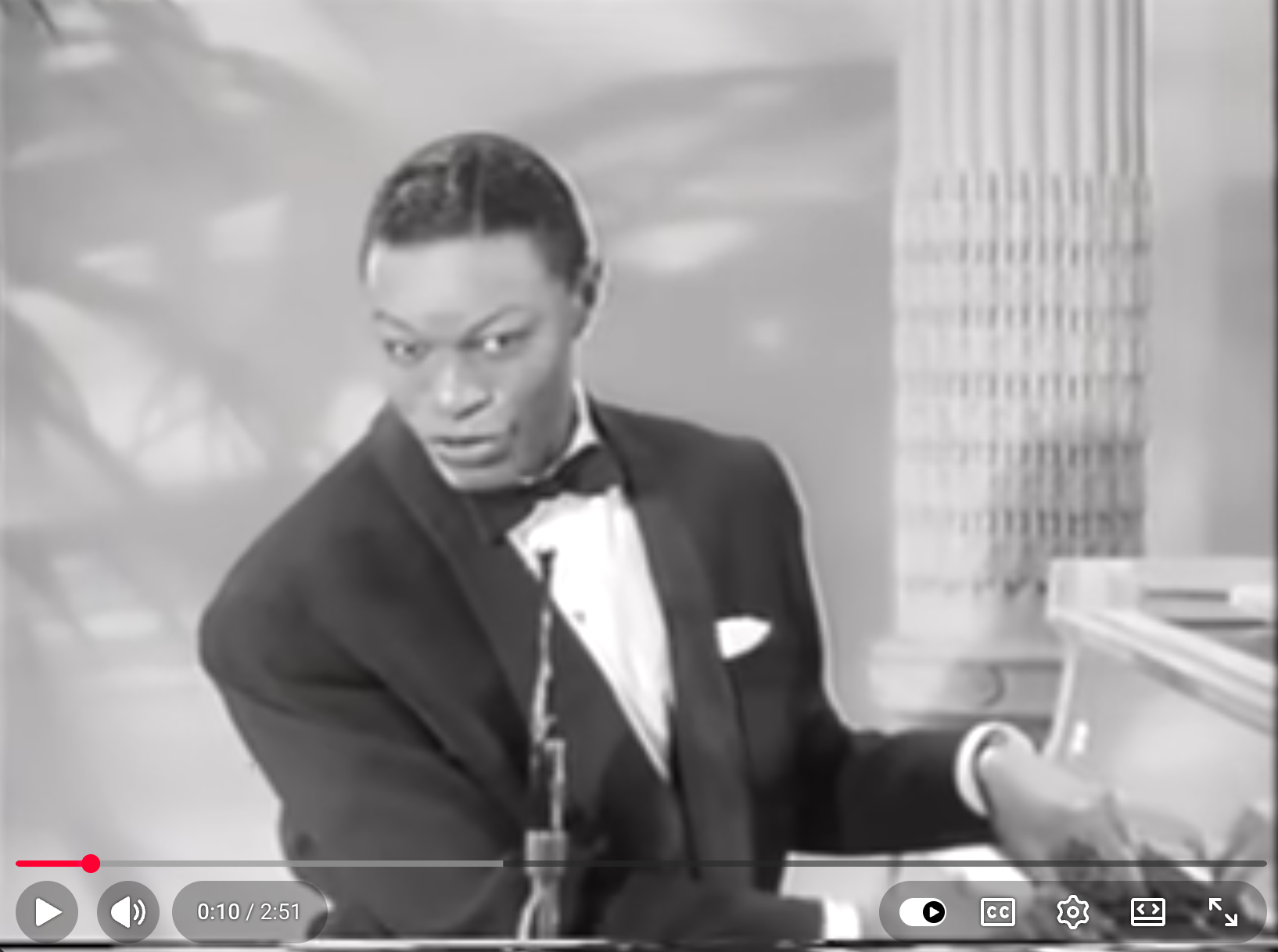
Watch the video of “Nature Boy” by Nat King Cole.
The following activities and questions are designed to help your students use their noticing skills to move through the poem and develop their thinking skills so they understand its meaning with confidence, using what they’ve noticed as evidence for their interpretations. Read more about the framework upon which these activities are based.
-
Warm-up: (Teachers, before class, ask students to bring in a photo of a place or person that is meaningful to them.) Share your photo with a classmate or small group. Who or what is in this photo? How is this person or place meaningful?
-
Before Reading the Poem: Watch the video of “Nature Boy” by Nat King Cole. What words or phrases stand out? What emotions does the song evoke? Why?
-
Reading the Poem: Silently read the poem “Citizen” by Gbenga Adesina. What do you notice about the poem? Note any words or phrases that stand out to you or any questions you might have.
-
Listening to the Poem: Enlist two volunteers and listen as the poem is read aloud twice. Write down any additional words and phrases that stand out to you.
-
Small Group Discussion: Share what you noticed about the poem with a small group. How does the poem connect to the song and the image you shared at the beginning of class? What do you think of the title “Citizen”? What does it mean to be a citizen? How does the speaker view citizenship? How does the speaker describe their relationship to Brooklyn?
-
Whole Class Discussion: What imagery do you notice in the poem? What do you make of the last two lines of the poem, “It is not true that I praise the dead. I merely ask them to teach / me their song”? How does grief impact the speaker?
- Extension for Grades 7-8: The poem includes rich, layered imagery to express complex themes. Create a mood board that uses colors, textures, and found images to represent themes in the poem, along with your own ideas. Share your mood board with the class.
-
Extension for Grades 9-12: Think back to the image you shared at the beginning of class. How does this person or place make you feel like you truly belong? Try incorporating a line or image from “Citizen” into your poem. Share your writing with the class.
“A question that came up many times was: what inspired me to write this poem. Poetry is a story of being human. It is a way to make, to witness, to advocate, and to resist. I wrote this poem three years ago in response to immigration reforms that I felt were unnecessarily cruel and dehumanizing. It was a hard poem to write in that it necessitated reading articles, reports and first-person narratives of loss, despair, and sacrifice. However, it was important to me that my poem will also be one of hope and resilience. I wanted to juxtapose present-day stories of migration with the founding principles which built this nation. At the heart of my poem is the question of what it truly means to be American.” Read correspondence between Aileen Cassinetto and students about her poem, “There are no kings in America,” as a part of the 2022 Dear Poet project.
Speaker: the voice of the poem, similar to a narrator in fiction.