
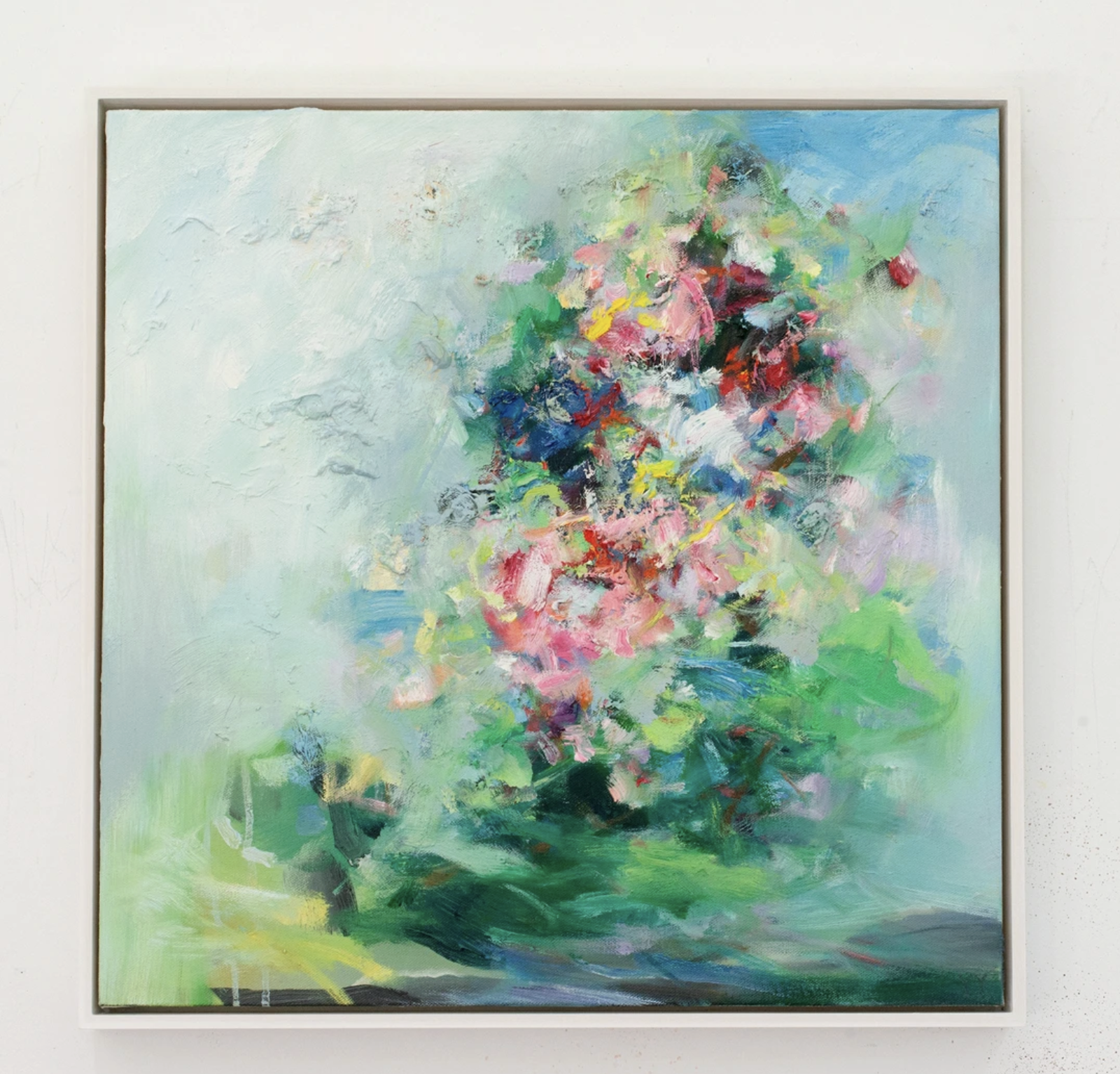
 Look closely at the image of the painting Rainy Day After by Yangyang Pan.
The following activities and questions are designed to help your students use their noticing skills to move through the poem and develop their thinking skills so they understand its meaning with confidence, using what they’ve noticed as evidence for their interpretations. Read more about the framework upon which these activities are based.
-
Warm-up: Look closely at the image of the painting Rainy Day After by Yangyang Pan. What colors stand out in the painting? Why? Which emotions does this painting evoke? Why? Why might the title of this painting be Rainy Day After? Look at the painting again. What else do you see?
-
Before Reading the Poem: Listen to the song “Hard Times” by Paramore. What words or phrases stand out in the song? Why?
-
Reading the Poem: Silently read the poem “There Will Come Soft Rains” by Sara Teasdale. What do you notice about the poem? Note any words or phrases that stand out to you or any questions you might have.
-
Listening to the Poem: Enlist two volunteers and listen as the poem is read aloud twice. Write down any additional words and phrases that stand out to you.
-
Small Group Discussion: Share what you noticed about the poem with a small group. How do the resources from the beginning of class connect to the poem? The poem is written in couplets, or lines of two. Which couplet do you like the most? Why? What imagery do you see in your couplet?
-
Whole Class Discussion: What do you make of the repetition in the poem? The poem begins with the epigraph “war time.” How does the idea of war impact the poem? What does this poem say about hope and/or new beginnings?
-
Extension for Grades 7-8: Use the opening phrase of the poem, “[t]here will come …” to write your own poem. The poem contrasts war with the tranquility of nature. What contrast do you want to use in your poem? Share your poem with the class.
- Extension for Grades 9-12: Write a new poem from the point of view of nature in “There Will Come Soft Rains.” In the poem, the speaker says, “Not one would mind, neither bird nor tree / If mankind perished utterly.” What might nature say in response to the idea that humans have disappeared? What might a world without humans look, sound, and feel like? Share your writing with the class.
In the article, “Who’s Who in American War Verse,” Sara Teasdale says, “The writing of poems should be considered as natural as the writing of letters. Children should make up poems without the slightest embarrassment, and the time spent in school writing their own poems would be better spent than that consumed in learning arithmetic. Poetry is the most democratic of the arts, because no money is needed for long special training in learning now to compose it. It is the best antidote for the morbid repression that many of us have inherited from generations of Puritan ancestors. When everybody writes his own poems, two-thirds of the misery of the world will flow away singing like ice-locked rivers when the spring sets in.”
A couplet is two successive lines of poetry, often rhymed.